
10 Things Pro Snow Removal Companies Do in Winter
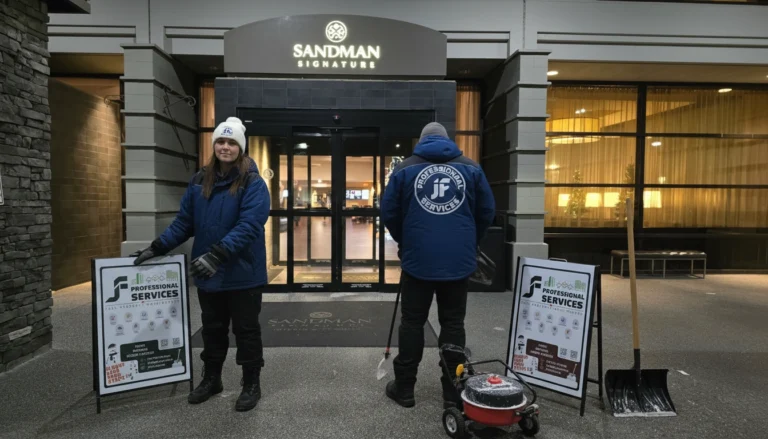
Winter doesn’t ease into commercial properties in the Lower Mainland — it arrives. One overnight temperature drop, one surprise squall off the mountains, and a parking lot that was perfectly dry at 5 p.m. is a liability problem by 6 a.m. For commercial property managers, strata councils, and building owners, snow and ice aren’t just a maintenance inconvenience. They’re one of the fastest ways a property goes from “well-managed” to “the subject of a slip-and-fall claim.”
The properties that sail through winter without incident aren’t lucky. They’re prepared, and that preparation almost always traces back to the same thing: a professional commercial snow removal company running a disciplined, documented operation behind the scenes. Here’s what that actually looks like — the ten things separating a property that handles winter well from one that’s rolling the dice every time the forecast changes.
1. Weather Monitoring That Starts Before the Snow Does
Amateur snow removal reacts. Professional snow removal anticipates. A serious commercial snow removal operation isn’t waiting for someone to call and say the lot is icy — they’re tracking Environment Canada alerts, localized forecasting models, and pavement temperature trends days ahead of a storm. In a region like Surrey or the broader Metro Vancouver area, where a system can swing from rain to freezing rain to snow within a few hours, that lead time is everything.
This matters because winter risk isn’t only about snowfall totals. A light dusting on a surface that’s already at or near freezing can be more dangerous than several centimeters of snow on a mild day. Crews who track dew point, pavement temperature, and precipitation type — not just “how much snow is coming” — know when black ice is forming even when nothing is visibly falling.
Why This Protects the Property – Weather monitoring is what turns snow removal from a same-day scramble into a planned operation. It’s the difference between a crew arriving at 4 a.m. ready to go and a crew arriving after the first slip-and-fall report comes in.
2. A Response Plan Built Before Winter, Not During It
Every commercial property with a professional maintenance contract should have a written winter response plan on file before the first snowfall — not a verbal understanding, an actual document. That plan spells out:
- Trigger depths and conditions for mobilization (e.g., dispatch begins at 2.5 cm of accumulation or at first sign of ice formation).
- Response time commitments for plowing, salting, and sidewalk clearing.
- Priority order across the site (entrances first, then fire lanes and accessible routes, then general parking)
- Escalation procedures for multi-day storm events
Strata councils in particular benefit from having this in writing, since it becomes the reference point when owners ask “why wasn’t the visitor lot cleared first?” The answer should already be documented, not improvised after the fact.
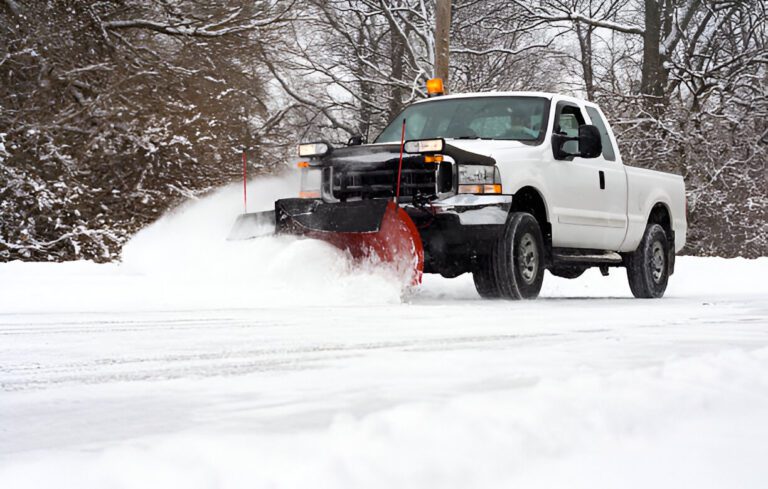
3. High-Risk Area Mapping
Not every square metre of a commercial site carries the same risk, and treating it that way wastes salt, time, and labour. Professional crews walk the property in advance — usually in the fall — and map the zones that ice up first and stay dangerous longest:
- North-facing entrances that get no direct sun
- Areas under downspouts or near drainage points where runoff refreezes
- Ramps, loading docks, and any sloped pavement
- Shaded walkways between buildings
- Handicap-accessible routes and building entrances, which carry outsized liability exposure if neglected
This map becomes the backbone of the response plan. When a storm hits, the crew isn’t figuring out where the problem spots are in real time — they already know, and those areas get treated first and checked most often.
4. De-Icing Strategy, Not Just De-Icing Product
There’s a real difference between “throwing salt down” and running a de-icing program. Professional operators think in terms of:
- Pre-treatment (anti-icing): applying liquid or granular de-icer before a storm to prevent bonding between ice and pavement — far more effective than trying to break an existing bond after the fact.
- Product selection by temperature: standard rock salt (sodium chloride) loses effectiveness below about -9°C, so crews carry calcium chloride or magnesium chloride blends for deep-freeze conditions common during Arctic outflow events in BC’s Interior-influenced cold snaps.
- Application rate control: over-salting damages landscaping, concrete, and vehicles, and it’s a needless cost; under-salting leaves gaps in coverage. Calibrated spreaders, not shovels and guesswork, keep application consistent.
- Environmental responsibility: many BC municipalities and watershed programs encourage reduced chloride use near storm drains and green infrastructure — a professional crew balances safety with runoff impact, which matters for properties near creeks or environmentally sensitive areas.
This is where “sidewalk snow clearing” and “parking lot snow clearing” genuinely diverge as skill sets — walkways need finer, more controlled de-icing for pedestrian traction, while lots need broader mechanical clearing paired with vehicle-safe de-icer.
5. Multiple Site Visits During Active Storms
A single pass at 6 a.m. doesn’t cut it during a multi-hour storm, and this is one of the clearest markers of a professional operation versus a bargain contractor. Snow that falls at 7 a.m. and isn’t addressed again until 3 p.m. has had eight hours to get compacted, walked on, driven over, and refrozen into a much harder problem than fresh snow ever was.
Commercial-grade contracts typically include continuous monitoring and repeat visits throughout an active event — often every 2 to 4 hours depending on accumulation rate — with a final cleanup pass once the storm has fully passed. For strata properties and retail sites with all-day foot traffic, this repeat-visit model is often the single biggest factor in whether a winter goes by without an incident.
6. Equipment Readiness — Checked, Not Assumed
Nothing undermines a winter response plan faster than a plow truck that won’t start or a spreader that jams at 5 a.m. during a storm. Professional operations run pre-season equipment inspections and maintain redundancy:
- Plow trucks and skid steers serviced and inspected before the first forecasted snowfall
- Calibrated spreaders tested for even distribution, not just “does it turn on”
- Backup equipment available so one mechanical failure doesn’t take a whole site off the schedule
- Hand tools, ice scrapers, and walk-behind spreaders staged for tight areas trucks can’t reach — stairwells, narrow walkways, loading dock aprons
Equipment readiness sounds unglamorous, but it’s often the actual reason one company gets a 45-minute response time and another gets a call back the next day.
7. Documentation That Would Hold Up in Court
This is the one property managers underestimate most, and it’s arguably the most important item on this list from a liability standpoint.
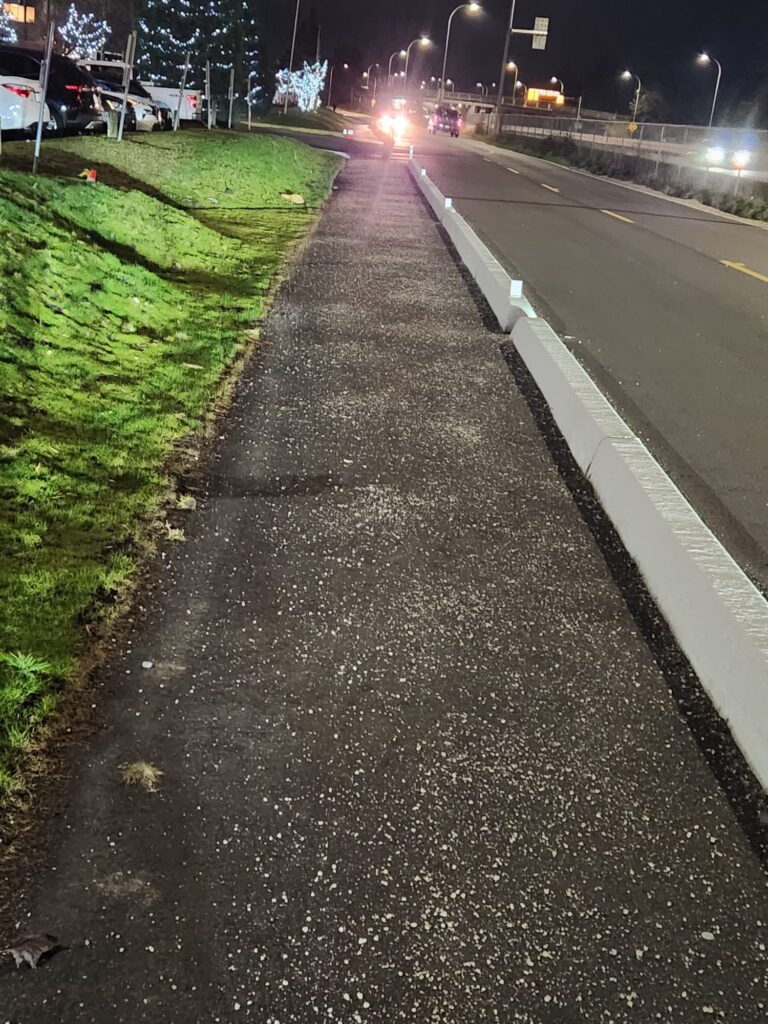
Professional snow removal companies keep detailed, timestamped service logs for every visit: arrival and departure time, weather and pavement conditions observed, areas treated, product and quantity applied, and photos of site conditions before and after service. Some use GPS-tracked equipment and app-based logging so every pass is verifiable.
In the event of a slip-and-fall claim — and in commercial property management, it’s a matter of when, not if, someone eventually claims one — this documentation is often the deciding factor in whether the property owner or management company is found to have exercised reasonable care. “We had a contractor” is not a defence. “Here’s the timestamped log showing the lot was salted at 5:40 a.m., two hours before the incident, with photos” is a defence.
If your current snow removal provider can’t produce this kind of record on request, that’s a liability gap worth closing before winter, not after a claim is filed.
8. Liability Reduction Built Into the Contract, Not Bolted On
Beyond documentation, a professional operator structures the entire service agreement around reducing the property’s exposure:
- Clear scope-of-work language defining exactly what’s covered (which lots, which sidewalks, snow removal vs. de-icing vs. both).
- Defined response time commitments tied to specific trigger conditions.
- Adequate insurance coverage and, ideally, an indemnification clause protecting the property owner.
- A named point of contact and defined escalation path during major storm events.
Vague verbal arrangements — “they come by when it snows” — leave property managers and strata councils exposed. A proper contract is itself a risk management tool.
9. Proactive Client Communication During Storm Events
Property managers shouldn’t be finding out what happened on-site by walking outside and checking themselves.
Professional providers communicate proactively:
- Pre-storm notice when a significant weather event is forecast, including expected response timing.
- Real-time or same-day updates during multi-day storms, especially if conditions are deteriorating faster than planned.
- Immediate notification of any site hazard that can’t be fully resolved right away (a downed tree limb, a frozen drain causing pooling, an area needing barricading).
- A clear channel for tenants or strata owners to report a concern that gets relayed back to the crew quickly.
For strata councils especially, this communication becomes part of what they can report back to owners — proof that the building is being actively managed through the storm, not just “handled eventually.”
10. Final Safety Inspections After Every Event
The job isn’t done when the plowing stops. A thorough operator does a final walk-through after each storm to confirm:
- All priority areas — entrances, accessible routes, fire lanes — are fully cleared, not just passable.
- Refreeze risk overnight is addressed with a final de-icing pass where needed.
- Snow piles are placed where they won’t block sightlines, drainage, fire hydrants, or accessible parking.
- Any damage to landscaping, curbs, or pavement from the storm or from equipment is noted and reported.
This final check is what catches the problems that would otherwise surface as a complaint — or an incident — the next morning.
Common Mistakes Property Managers Make With Winter Maintenance
Even well-intentioned property managers run into the same handful of issues year after year:
- Hiring on price alone. The cheapest quote is often cheapest because it skips pre-treatment, uses minimal staffing, or doesn’t include repeat visits during storms. The savings on the invoice get spent several times over in liability exposure.
- No written response plan. Verbal understandings fall apart exactly when they’re tested — during a major storm, when everyone’s stretched thin and memory of “what we agreed” gets fuzzy.
- Treating snow removal as a single event. Winter risk doesn’t end when the snow stops falling. Refreeze overnight, black ice the next morning, and compacted snow turning to ice over several days are often more dangerous than the storm itself.
- Skipping documentation review. Many property managers never actually ask their contractor for service logs until after an incident — at which point it’s too late to find out the records don’t exist.
- Underestimating shaded and low-traffic areas. Loading docks, side entrances, and stairwells get less attention than the main lot, but they’re often where ice lingers longest and where injuries are most likely, precisely because people don’t expect it there.
Assuming one company can “figure it out” without a site walk. Every commercial property has its own drainage patterns, sun exposure, and traffic flow. A generic plow-and-salt approach without a property-specific plan leaves gaps.
Winter Doesn’t Forgive Guesswork
Commercial snow removal isn’t about who shows up with a plow truck after it snows. It’s weather monitoring before the storm, a documented response plan, high-risk area mapping, calibrated de-icing, repeat site visits, equipment that’s actually ready, records that hold up if something goes wrong, a contract that reduces your exposure instead of ignoring it, proactive communication, and a final inspection that catches what the storm left behind.
That’s the standard we hold ourselves to at JF Professional Services for every commercial property, strata site, and parking lot we maintain through the winter season. If your current winter maintenance plan is missing any of the ten items above, that’s usually the first sign it’s worth a second look before the season gets underway.
 "/>
"/>